


Views: 0 Author: Site Editor Publish Time: 2026-08-23 Origin: Site


Many eyewear buyers face a frustrating dilemma. You purchase a stylish pair of thick-frame glasses based on their bold aesthetics, only to experience severe bridge pressure or temple pinching by mid-afternoon. For continuous wear lasting eight or more hours, visual appeal falls short. All-day wear requires a strict balance of ergonomic weight distribution, skin compatibility, and thermal stability. Standard marketing materials rarely quantify these factors. Our objective in this guide is to strip away aesthetic marketing and technically evaluate Acetate Glasses based on material properties, adjustability, and long-term physiological comfort. You will learn how to identify proper bridge fit, understand the impact of skin chemistry on frame longevity, and discover actionable strategies to prevent slipping and pressure points.
Custom Fit is Mandatory: Unlike metal frames with independent nose pads, the comfort of acetate relies heavily on exact bridge-width matching and thermal molding of the temple tips by an optician.
Skin Chemistry Matters: While universally marketed as hypoallergenic, cellulose acetate reacts differently to individual skin pH levels; highly acidic sweat can cause the material to degrade or "frost" over time.
Weight Trade-offs: Acetate is inherently heavier than titanium or standard metal alloys, requiring strategic lens pairing (such as high-index or lightweight blue light glasses) to prevent downward migration on the nose.
Material Sourcing Dictates Longevity: Premium variants (e.g., Mazzucchelli acetate) retain structural integrity and color significantly better than standard injection-molded plastics or lower-tier acetate, which are particularly prone to yellowing.
Eco-Friendly Advantage: Beyond comfort, high-quality cellulose acetate offers a sustainable, plant-based alternative to traditional petroleum-based plastics.
Comfort in eyewear is a measurable mechanical outcome. When you wear glasses for more than eight hours a day, the frame interacts continuously with the sensitive anatomy of your face. True ergonomic comfort depends on how effectively the frame manages gravity, friction, and pressure over time.
Weight distribution dictates long-term wearability. The total mass of the frame and lenses must balance perfectly between the nasal bridge and the mastoid bone behind your ear. An ideal fit achieves a 60/40 weight split, with the majority of the load resting on the nose and the remainder anchored by the ears. If the front of the frame is too heavy, the glasses pull downward. This forces the wearer to push them back up repeatedly, causing fatigue. A properly balanced frame rests gently on the nose while the temple tips anchor securely behind the ears, neutralizing the forward pull.
Friction and slippage stem from poor ergonomic alignment. Glasses slide down the nose for several mechanical reasons. Sweat accumulation acts as a lubricant, breaking the friction between the frame and the skin. An improper bridge angle fails to make full contact with the nasal contours, reducing the surface area available for grip. If the temples are too wide or lack sufficient inward curve, they provide no lateral support. The bridge then bears the entire load.
Pressure points develop when frames lack flexibility or are improperly adjusted. The human head is asymmetrical. Rigid frames create painful hotspots. The primary pain zones include the temporal sides of the head, where tight arms restrict blood flow. The bridge of the nose suffers when narrow frames dig into the cartilage. The back of the ears hurts when sharp or poorly angled temple tips press against the mastoid bone. Eliminating these pressure points requires a material customized to the wearer's exact cranial shape.
To evaluate a frame's ergonomic baseline before purchasing, follow these sequential steps:
Measure the distance between your pupils (PD) to ensure the optical center aligns with the frame's geometric center.
Check the bridge width against your nasal flare; there should be no visible gaps between the acetate and your skin.
Assess the temple length to confirm the bend starts exactly at the top of your ear, not before or after.
Test the lateral tension by shaking your head slightly; the frames should hold firm without squeezing your temples.
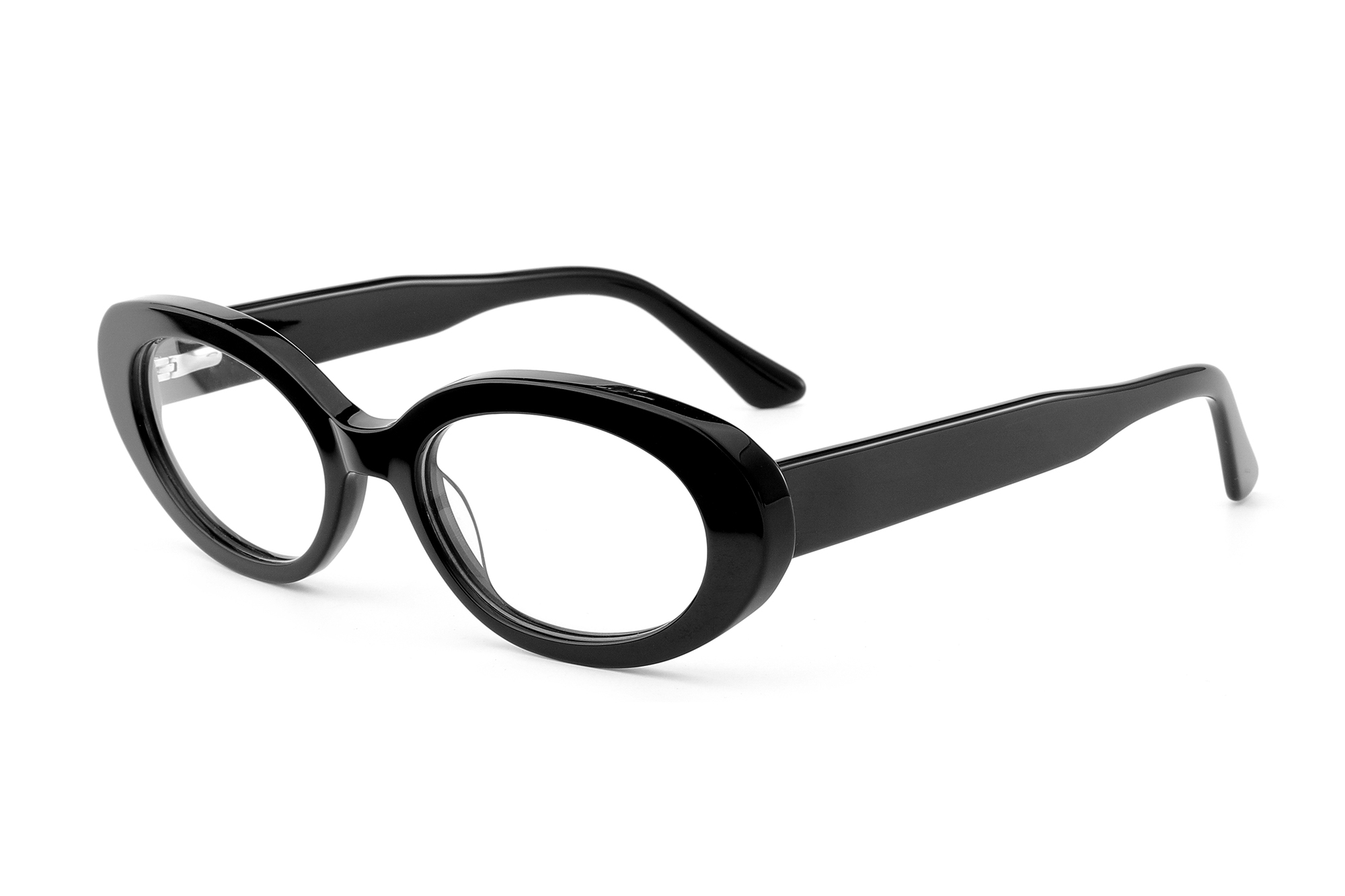
To understand how frames perform during long shifts, you must understand their chemical and physical composition. Cellulose acetate differs fundamentally from the standard petroleum-based plastics used in cheap eyewear. It is a plant-based bioplastic derived primarily from cotton linters and purified wood pulp. This organic origin gives the material a unique tactile warmth. It does not feel cold against the skin in winter, nor does it feel harsh or brittle like injection-molded polycarbonate.
The manufacturing process heavily influences the final comfort and durability of the frame. Manufacturers create standard plastic glasses by melting petroleum pellets and injecting them into a mold. This process is fast and cheap but results in a brittle frame with a painted finish that easily chips. Acetate frames require a labor-intensive process. Manufacturers form the material into large, solid block sheets. They then CNC-mill or cut individual frames directly from these solid blocks. This subtractive manufacturing method results in higher material density, richer color depth that runs entirely through the frame, and superior structural integrity.
After the initial milling, high-quality acetate frames go through an extensive tumbling process. Workers place them in large barrels filled with wood chips and polishing compounds for several days. This slow friction smooths out all sharp edges left by the CNC machines. The result is a seamless, rounded finish that rests comfortably against the skin without digging in. Cheaper plastics skip this extended tumbling, leaving microscopic rough edges that irritate the skin after a few hours of wear.
Not all acetate performs the same. The sourcing variable plays a massive role in long-term satisfaction. Premium European acetate, such as Mazzucchelli acetate from Italy, undergoes rigorous curing processes lasting up to six months. This curing stabilizes the plasticizers, ensuring the frame remains flexible and retains its shape for years. Mass-market alternatives often skip extended curing times. This difference becomes glaringly obvious with transparent frames. Lower-tier clear acetate is highly susceptible to yellowing over time due to UV exposure and interaction with skin oils. Premium sourcing ensures that transparent frames maintain their crystal clarity and structural flexibility even after years of daily wear.
Cellulose acetate also offers a sustainable alternative to petroleum plastics. Because it derives from renewable resources like cotton and wood pulp, it biodegrades much faster than traditional plastics under the right conditions. This eco-friendly profile appeals to wearers who want to reduce their environmental footprint without sacrificing durability or style.
The greatest advantage of cellulose acetate for all-day comfort is its thermal adjustability. Acetate softens at relatively low, controlled temperatures. Opticians use specialized frame warmers, often filled with hot sand or forced hot air, to heat specific sections of the frame without damaging the finish or the lenses.
This thermal property allows an optician to bend and mold the temple tips precisely to the wearer's unique cranial curve. If the glasses are slipping, the optician can heat the temple tips and curve them sharply downward to hook securely behind the ear. If the frames are pinching the sides of the head, they can heat the bridge or the temple hinges to widen the overall fit. This capacity for bespoke customization eliminates behind-the-ear pressure points and creates a tailored fit essential for everyday wear. Standard injection-molded plastics simply snap or melt when subjected to this level of adjustment.
Acetate is widely celebrated as a skin-friendly material, but this claim requires technical context. It is exceptionally effective at preventing metal allergies. Wearers who suffer from nickel dermatitis will find immediate relief by switching to acetate frames, as there are no exposed metal parts resting against the cheeks or temples.
Skin acidity introduces a different challenge. Human sweat varies in pH levels from person to person. Highly acidic sweat can react over time with the plasticizers embedded within the acetate. This chemical reaction causes the plasticizers to migrate to the surface, leading to a white, cloudy residue commonly referred to as calcification or frosting. This usually occurs on the inside of the temples where the frame makes constant contact with the skin. While it does not immediately ruin the frame, it creates a rough texture that can cause micro-abrasions on sensitive skin during long periods of wear. Regular cleaning and occasional professional polishing manage this reaction.
Because acetate frames are cut from solid blocks, they typically feature a fixed-bridge design. Unlike metal frames with adjustable silicone nose pads, a fixed bridge cannot be tweaked to fit your nose; it either fits perfectly off the shelf, or it does not. This makes the initial selection critical for all-day comfort.
There are two primary styles of fixed bridges. A saddle bridge drapes smoothly across the top of the nose, distributing weight evenly over a large surface area. A keyhole bridge is shaped like an old-fashioned keyhole, resting entirely on the sides of the nose while leaving the top clear. Keyhole bridges are excellent for individuals with prominent or wide nasal bridges. For wearers with flat or low nose bridges, standard acetate frames will slide down constantly. To solve this, many modern acetate frames now incorporate metal-arm nose pads drilled directly into the acetate chassis. When properly fitted in tandem with adjusted temple tips, these hybrid designs mitigate fit issues for lower nose bridges and maximize all-day comfort.
Choosing a frame material requires balancing aesthetics, durability, and ergonomic weight. Understanding how acetate compares to its primary competitors helps clarify whether it is the right choice for your specific daily routine.
Metal frames, particularly those made from titanium, offer a sleeker profile and significantly lighter weight. Titanium is exceptionally durable and can bend without breaking. Because metal frames are thin, they rely on independent silicone nose pads to bear the weight of the glasses.
Acetate provides distinct advantages over metal despite being heavier. The thick rims of an acetate frame provide excellent lens edge concealment. If you have a high prescription that requires thick lenses, a metal frame will leave the edges exposed, creating a thick visual profile. Acetate hides this thickness effortlessly. Furthermore, acetate offers infinitely more bold color options and patterns, such as classic tortoiseshell. From a tactile perspective, acetate feels warmer against the skin in cold climates, whereas metal can feel freezing and uncomfortable during winter commutes.
TR90 is a thermoplastic material known for its extreme flexibility and lightweight nature. It is often referred to as memory plastic because it can be bent severely and will snap back to its original shape. This makes TR90 superior for sports eyewear or safety glasses where impact resistance is the priority.
TR90 lacks the premium aesthetic and deep luster of polished acetate. More importantly, TR90 cannot be thermally adjusted by an optician. Because it always returns to its original molded shape, you cannot customize the temple tips to hug your ears. If a TR90 frame does not fit perfectly out of the box, it never will. TR90 often uses pinless hinges or molded plastic joints, whereas acetate frames utilize robust, multi-barrel metal hinges riveted directly into the chassis. This makes acetate far more repairable. Acetate sacrifices the extreme flexibility of TR90 in exchange for thermal adjustability, a premium finish, and an eco-friendly plant-based profile.
Frame Material Comparison Summary
Feature | Cellulose Acetate | Titanium / Metal | TR90 (Memory Plastic) |
|---|---|---|---|
Weight Profile | Moderate to Heavy | Ultra-Lightweight | Lightweight |
Thermal Adjustability | High (Custom molding) | High (Nose pads & bending) | None (Returns to original shape) |
Lens Concealment | Excellent for high prescriptions | Poor (Edges exposed) | Good |
Skin Reaction | May frost with high skin acidity | Hypoallergenic (Titanium only) | Highly resistant to sweat |
Best Use Case | Everyday professional & fashion wear | Minimalist styling & low weight | Sports & high-impact activities |
A common mistake buyers make is evaluating the comfort of a frame while it contains lightweight plastic demo lenses. The true test of comfort occurs only after your actual prescription lenses are installed. Heavy frames require strategic lens choices to prevent the glasses from sliding down the nose.
The total ergonomic load is the combined weight of the frame chassis and the optical lenses. Because acetate is a dense material, adding standard, thick glass or basic plastic lenses can push the total weight beyond the comfort threshold for an eight-hour workday. When the front of the glasses becomes too heavy, the center of gravity shifts forward. No amount of temple adjustment can fully counteract a severely front-heavy pair of glasses. Managing the weight of the lenses is a strict requirement for long-term wearability.
Your lens material must be chosen based on your prescription strength and daily use case. Professionals who spend long hours in front of screens often wear non-prescription Blue Light Glasses. Because these lenses do not require corrective curvature, they can be made from standard CR-39 plastic or polycarbonate. These materials are inherently lightweight, making them an excellent pairing for thicker acetate frames. The overall weight remains low, ensuring the glasses stay comfortably positioned on the bridge of the nose throughout the workday.
Prescription wearers face a different challenge. Standard plastic lenses become exponentially thicker and heavier as the prescription strength increases. To keep the overall weight of the acetate glasses manageable, prescription wearers must invest in high-index lenses. High-index materials, such as 1.67 or 1.74 index lenses, bend light more efficiently, allowing the lens to be cut significantly thinner and lighter than standard plastic. Pairing high-index lenses with an acetate frame ensures you get the aesthetic benefits of thick frames without the crushing weight on your nasal bridge.
The most frequent failure point for acetate frames is continuous sliding. Fixed acetate bridges slip easily when introduced to facial oil, sweat, or heavy humidity. Because the bridge is smooth polished plastic, it lacks inherent grip.
You can mitigate this risk through several strategies. Consider opting for matte-finish acetate rather than high-gloss polish, as the matte texture provides slightly more friction against the skin. Utilize anti-slip silicone waxes designed specifically for eyewear; applying a small amount of beeswax-based optical wax to the bridge creates a temporary, invisible grip. If you know you have a low nasal bridge, bypass traditional fixed bridges entirely and choose acetate frames with built-in adjustable metal nose pads.
The same thermal adjustability that makes acetate so comfortable also makes it vulnerable to environmental damage. Because acetate softens at relatively low temperatures, exposing the frames to high-heat environments will cause them to warp, stretch, or lose their custom fit entirely. Acetate begins to soften around 130°F to 150°F, a temperature easily reached inside a closed vehicle on a sunny day.
Leaving your glasses on a parked car dashboard during the summer is a guaranteed way to ruin the frame alignment. The intense ambient heat will cause the bridge to flatten and the temples to splay outward. Mitigation requires strict storage protocols. Always keep your frames in a hard protective case when not in use, and keep them away from direct, prolonged thermal exposure, including radiators, hot cars, and prolonged direct sunlight.
Acetate frames are held together by metal hinges embedded in the plastic. Taking your glasses off with one hand repeatedly stresses these hinges and stretches the acetate out of alignment. Over time, the frames will become loose and constantly slide down your face.
Mitigating this mechanical stress requires habit changes. Always practice two-handed removal, pulling the glasses straight forward off your face rather than peeling them away from one side. Schedule regular visits to your local optician every six months. They can perform a quick thermal readjustment to tighten the frame and restore the original bespoke fit.
Improper cleaning routines can destroy the finish of an acetate frame. Using harsh household chemicals, window cleaners, or alcohol-based wipes will strip the polished finish off the acetate. This chemical degradation accelerates the frosting effect mentioned earlier, drying out the plasticizers and making the frames feel rough and irritating against the skin.
To preserve the material's hypoallergenic coating and structural integrity, implement a gentle care routine. Clean your glasses using only lukewarm water and a single drop of mild, lotion-free dish soap. Gently rub the lenses and the frame with your fingertips, rinse thoroughly, and dry them with a clean microfiber cloth. Never use paper towels or clothing, as wood fibers and dirt particles will scratch both the lenses and the polished acetate surface.
To ensure your acetate frames deliver true all-day comfort, you must actively manage their fit and maintenance. Follow these specific steps to optimize your eyewear experience:
Prioritize bridge fit during the initial try-on phase by verifying the frame rests flush against your nose without visible gaps.
Select lightweight lens materials, such as high-index plastic or non-prescription polycarbonate, to prevent the frame from becoming front-heavy.
Schedule a professional fitting with an optician immediately upon purchase to thermally mold the temple tips to the exact curve of your ears.
Adopt a strict two-handed removal habit to prevent the hinges from stretching and misaligning the frame over time.
A: Yes, cellulose acetate is denser and thicker than metals like titanium or stainless steel. While this provides better durability and hides thick prescription lenses well, it does result in a heavier frame. Pairing acetate with lightweight high-index lenses helps balance the overall weight for comfortable all-day wear.
A: Absolutely. Acetate is a thermoplastic material that softens when heated. An optician can use a specialized frame warmer to heat the bridge or temple arms, bending them inward to tighten the fit and prevent the glasses from slipping down your face.
A: This white, cloudy residue is known as calcification or frosting. It occurs when the acidic pH of your sweat reacts with the plasticizers inside the acetate over time. Regular cleaning with mild soap and water helps prevent this, and an optician can often polish away mild frosting.
A: Transparent acetate turns yellow due to prolonged exposure to UV light and the absorption of skin oils and sweat. Lower-quality acetate yellows much faster. To prevent this, choose premium materials like Mazzucchelli acetate, clean them daily to remove oils, and store them in a case away from direct sunlight.
A: Yes, acetate frames can stretch out, especially if you frequently remove them with one hand or push them up onto the top of your head. This places uneven stress on the hinges and the plastic. Practicing two-handed removal prevents this mechanical stretching.
A: Clean acetate frames using lukewarm water and a drop of mild, lotion-free dish soap. Gently rub the frame and lenses with your fingers, rinse, and dry with a microfiber cloth. Avoid alcohol-based cleaners, window sprays, or hot water, as these will strip the polish and degrade the plastic.


