


Views: 0 Author: Site Editor Publish Time: 2026-09-12 Origin: Site


Many buyers select frames purely on aesthetics, only to experience daily discomfort, slipping, chipped paint, or poor lens integration weeks later. Frame selection is a technical decision masquerading as a fashion choice. You must balance optical prescription requirements, facial anatomy, and daily wear environments against physical material limitations. Choosing the wrong material compromises visual clarity and physical comfort. At the dispensing table, we see patients constantly pushing up heavy wire frames or dealing with snapped plastic hinges because they ignored material science. We provide an objective comparison between metal frames and acetate options based on real-world optical fitting experience. This guide helps you make a technically sound, long-lasting eyewear investment that actually supports your lenses and fits your face properly.
Prescription Compatibility: Acetate glasses naturally conceal thicker lens edges required for higher prescriptions, whereas thin metal frames leave thick edges exposed.
Fit and Adjustability: Metal frames utilize adjustable nose pads for a customizable fit on varying bridge shapes, while acetate relies on a molded saddle bridge that requires precise initial sizing.
Durability and Finish: Metal frames are prone to bending and their painted finishes can chip over time. Acetate glasses retain their shape better and feature embedded colors that never peel, though they can warp under extreme heat.
Biocompatibility & Sustainability: High-quality cellulose acetate is a plant-based, eco-friendly bioplastic that is naturally hypoallergenic. Titanium offers the best hypoallergenic properties among metals, avoiding the nickel reactions common in cheaper alloys.
Defining frame materials dispels marketing claims and helps you differentiate premium materials from cheap alternatives. Setting accurate durability expectations begins with understanding raw material composition. Many consumers confuse premium bioplastics with cheap injection-molded polymers. Others assume all metal frames offer identical performance. We must break down the exact composition of these materials to understand their physical behaviors on the face and in the optical lab.
Cellulose acetate is a sustainable, plant-based bioplastic. Manufacturers derive it primarily from wood pulp and natural cotton fibers. This organic origin distinguishes it entirely from cheap, petroleum-based injection-molded plastics. Petroleum plastics feel brittle, lose their shape quickly, and often snap under minimal tension. Cellulose acetate offers superior structural integrity, a premium tactile feel, and the ability to be adjusted with heat.
The manufacturing process dictates its quality. Artisans cut premium Acetate Glasses from solid blocks of the material. They do not pour liquid plastic into a mold. After cutting the frame front and temples, technicians tumble the parts in wood chips for days to smooth the edges, followed by extensive hand-polishing. This block-cutting method ensures colors and complex patterns remain embedded throughout the entire structure. A tortoiseshell pattern runs deep into the frame core. It is physically impossible for the color to chip, flake, or peel off over time. Scratches can often be buffed out by an optician because the color is not merely a surface coating.
Metal frames do not use a single universal material. The eyewear industry relies on several distinct alloys, each offering different performance metrics. Understanding these categories prevents unexpected skin reactions and structural failures at the solder points.
Monel: This is the industry standard for basic metal frames. It is highly malleable, making it easy for opticians to adjust the bridge and temples. However, Monel contains significant amounts of nickel. It relies heavily on protective clear coats to prevent skin reactions. Once that clear coat wears off from sweat, the raw metal contacts the skin.
Stainless Steel: This alloy offers excellent corrosion resistance. It is highly rigid and maintains its shape well under stress. Stainless steel provides a durable upgrade from Monel while remaining widely accessible. It is harder to adjust than Monel but holds its shape longer.
Titanium: This represents the premium tier of metal eyewear. Titanium is ultra-lightweight and exceptionally strong. It is completely hypoallergenic. It resists corrosion from sweat and saltwater perfectly. Opticians require specialized tools to adjust it due to its memory-metal properties.
All metal frames share specific baseline physical characteristics. They possess high tensile strength. This allows designers to create minimalist, thin-wire constructions that weigh very little. However, metals inherently rely on external plating, painting, or powder-coating for color. These surface treatments remain vulnerable to chipping and scratching over time, exposing the base metal underneath.
Material Category | Primary Composition | Key Structural Benefit | Notable Drawback |
|---|---|---|---|
Cellulose Acetate | Wood pulp and cotton fibers | Embedded colors never peel; hides thick lenses | Can warp under extreme heat exposure |
Monel Alloy | Nickel, copper, iron | Highly malleable for easy adjustments | High risk of allergic skin reactions |
Stainless Steel | Iron, carbon, chromium | Rigid and highly corrosion-resistant | Heavier than titanium and less flexible |
Titanium | Pure titanium or beta-titanium | Ultra-lightweight and completely hypoallergenic | Requires specialized equipment for repairs |
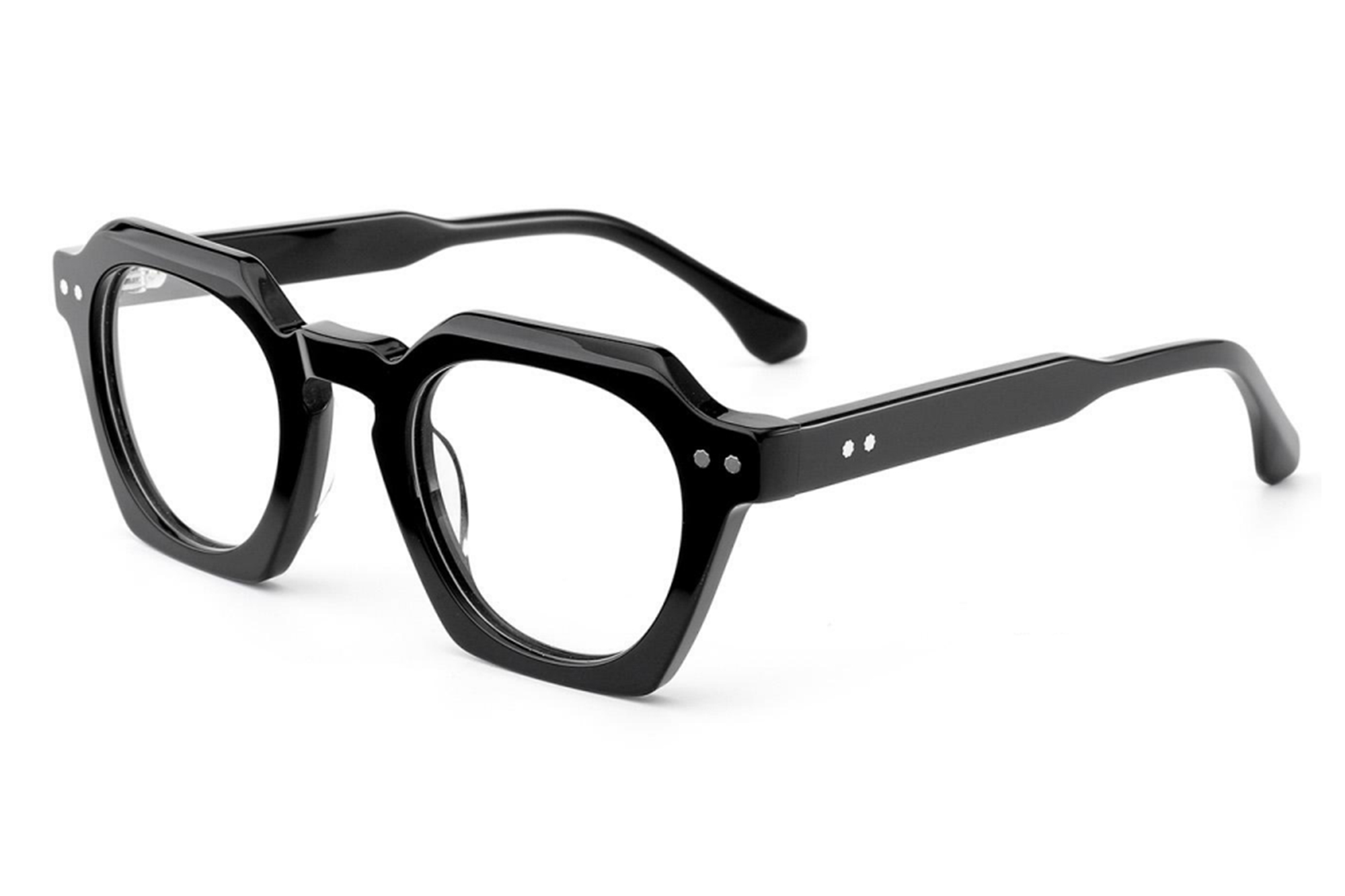
Frame material directly impacts optical performance. It affects lens integration, edge thickness visibility, and overall visual clarity. You cannot separate the frame from the prescription. The physical housing dictates how well your lenses perform during daily activities and how the final product looks on your face.
Strong prescriptions fundamentally alter lens geometry. Myopia, or nearsightedness, requires minus lenses that are thin in the center and thick at the outer edges. The stronger the prescription, the thicker those outer edges become. High-index lens materials reduce this thickness, but they cannot eliminate it entirely. A -6.00 diopter lens will always have a noticeable edge profile.
Acetate frames serve as the industry standard for high prescriptions. The thicker, sturdy rims naturally encapsulate protruding lens edges. A standard plastic frame has an eyewire depth of 3 to 5 millimeters. This depth hides the lens bevel and the thickest part of the lens from peripheral view. This creates a cleaner, more polished aesthetic. It also protects the fragile lens edges from accidental side impacts.
Putting thick lenses into thin metal frames carries significant aesthetic and structural risks. A standard metal eyewire is only 1 to 2 millimeters deep. Thin wire rims leave thick lens edges completely exposed. This creates a highly visible "coke-bottle" effect, drawing unwanted attention to the prescription strength. Furthermore, exposed edges increase the risk of lens chipping if you drop the glasses. The weight imbalance also poses a problem. Heavy lenses in a lightweight wire frame push the center of gravity forward. The glasses will constantly slide down your nose because the frame lacks the mass to counterbalance the heavy lenses.
Multifocal and progressive lenses require specific vertical depth. The lens must accommodate distance, intermediate, and reading focal zones. If the frame is too shallow, the optician must cut off the reading zone during the edging process. Both material types can accommodate progressive lenses, provided the frame design offers sufficient vertical height (usually a minimum of 28 millimeters from top to bottom).
Frame rigidity plays a massive role in progressive lens performance. Acetate frames often provide a more rigid, stable housing. This rigidity prevents the frame from warping or twisting over time. Progressive lenses demand precise alignment. The optical center must sit exactly over your pupil. If a wire frame twists slightly, the focal corridors shift away from your pupils. This causes immediate blurry vision, a "swimming" sensation, and eye strain. A sturdy frame ensures those focal corridors remain perfectly aligned with your natural gaze, reducing adaptation time for new progressive wearers.
Prescription Type | Acetate Performance | Metal Performance |
|---|---|---|
High Myopia (Nearsighted) | Excellent. Thick rims hide lens edges and balance weight. | Poor. Leaves edges exposed and creates a front-heavy fit. |
High Hyperopia (Farsighted) | Good. Supports the thicker center weight of plus lenses. | Fair. Requires careful sizing to avoid heavy center weight pulling the frame down. |
Progressive / Multifocal | Excellent. Rigid structure keeps focal zones perfectly aligned. | Good. Requires frequent adjustments to maintain optical center alignment. |
Low / Mild Prescription | Excellent. Purely an aesthetic choice. | Excellent. Minimalist frames work perfectly with thin lenses. |
Physical material properties translate directly into daily user comfort. Ergonomic outcomes and stability during movement depend entirely on frame construction. A frame that looks beautiful but hurts your nose holds no practical value in the real world.
Weight distribution mechanics differ drastically between materials. Acetate frames typically utilize a molded saddle bridge. This design distributes the weight of the glasses evenly across the entire top of the nose. It provides a sturdy, planted feel. When fitted correctly, a saddle bridge makes even heavy glass lenses feel comfortable. There are no pressure points digging into the skin. However, the fit must be exact from day one. If the bridge is too wide, the glasses will rest on your cheeks. If it is too narrow, they will sit too high and pinch.
Metal frames use an entirely different support system. They concentrate the total weight of the frame and lenses onto two independent nose pads attached to metal pad arms. These pads usually consist of silicone, PVC, or titanium. This concentrated weight can cause red marks or indentations on the skin after long hours of wear, especially with heavier prescriptions.
Active use highlights another key difference. Metal frames with silicone pads offer superior grip. The silicone adheres well to the skin, even during heavy sweating. This makes them suitable for humid environments or active jobs. Conversely, acetate frames lack this independent grip. If they are not perfectly fitted to your specific bridge anatomy, they may slide down your nose during intense physical activity or sweating. Opticians can add adhesive silicone pads to plastic frames, but this alters the aesthetic.
Maintenance realities vary significantly based on material choice. Metal frames offer excellent at-home adjustability. The independent nose pad arms bend easily with small pliers or your fingers. You can push them closer together or pull them apart to customize the bridge fit. Wire temples also allow for precise micro-adjustments around the ears. However, this flexibility acts as a double-edged sword. Because they bend easily, they require frequent re-tightening. Daily handling, taking them off with one hand, or bumping them slowly pushes them out of alignment.
Acetate frames present a different maintenance reality. They require professional heat-shaping for initial adjustments. An optician must warm the material using a specialized hot air blower to soften it before bending the temples or bridge. You cannot safely bend them cold at home; they will snap. However, once professionally adjusted, they hold their customized shape much longer. They do not require daily tweaking to remain straight on your face.
Manufacturers often add spring hinges to both material types. Spring hinges improve flexibility at the temple joint. They allow the arms to flex outward past ninety degrees. This accommodates wider faces comfortably. It also reduces the stress placed on the frame front when taking the glasses on and off, reducing the need for constant frame tightening and preventing the hinges from loosening over time.
Contact dermatitis remains a serious concern for daily eyewear users. The skin around the eyes and nose is highly sensitive. Constant friction combined with sweat can trigger severe allergic reactions, resulting in peeling, redness, and severe itching.
Plant-based bioplastics are naturally hypoallergenic. They contain no harsh metals or reactive chemicals. They are safe for all skin types. Users with severe sensitivities consistently rely on these frames for daily comfort. The material remains inert regardless of how much you sweat.
Standard metal alloys pose significant risks for sensitive users. Monel contains nickel, which is a highly common skin allergen. When the protective clear coat on a Monel frame wears off, the raw nickel contacts the skin. This causes immediate irritation. Furthermore, copper in some alloys reacts with acidic sweat, turning the skin green. If you prefer metal frames but have sensitive skin, you must upgrade. Titanium or stainless steel serve as necessary, safe alternatives that completely bypass nickel allergies and oxidation issues.
Identifying failure points requires looking at your lifestyle, climate, and environment. No frame material is indestructible. Each possesses specific vulnerabilities that you must manage to ensure a long lifespan for your eyewear.
Acetate exhibits a distinct vulnerability to extreme heat. It is a thermoplastic material. It softens when exposed to high temperatures. Leaving your glasses on a car dashboard during summer will cause the material to become overly flexible. The frame will warp out of shape, losing its custom fit. In severe cases, the expansion of the eyewire allows the lenses to pop out entirely. You must store them in a hard case away from direct heat sources.
Metal frames face different environmental threats. They are highly vulnerable to corrosive environments. Saltwater from the ocean and high-acidity sweat strip away protective clear coatings. Once the coating fails, oxidation begins. The metal corrodes, weakens at the solder joints, and causes the surface paint to chip away. Premium titanium is the only metal exception, as it remains completely impervious to saltwater and acidic corrosion, making it the standard for marine environments.
Failure modes differ drastically upon impact. When you drop or sit on metal frames, they typically bend and deform. The wire components twist out of shape, and the nose pad arms flatten. Fortunately, an experienced optician can often bend them back into alignment using specialized padded pliers. The damage is usually repairable, provided the solder joints at the bridge or endpieces do not snap.
Plastics possess natural elasticity for daily wear, allowing them to flex slightly around the head. However, they are ultimately more rigid than wire. Under extreme, sudden pressure, they do not bend. They snap. A broken plastic bridge or snapped hinge joint is usually irreparable. You must replace the entire frame front. Cold weather exacerbates this issue, making the plastic more brittle and prone to snapping if adjusted without proper heat.
Balancing stylistic preference with long-term durability determines the true value of your eyewear. You must weigh visual impact against daily practicality and replacement frequency.
Acetate frames carry high visual weight. They make a definitive statement on the face. They are best suited for bold, architectural looks. The material allows for vibrant opaque colors, subtle translucent styles, and classic tortoiseshell patterns. The thick rims draw attention to the eyes and serve as a prominent accessory. They define facial features and can mask heavy brow lines or under-eye circles.
Metal frames offer the exact opposite aesthetic. They provide low visual weight. They blend seamlessly into the face rather than dominating it. They are best for sleek, modern, and minimalist aesthetics. A "barely-there" wire frame suits professional environments where you want the glasses to remain unnoticed, allowing your natural facial features to take precedence.
Evaluate your upfront investment against expected longevity. High-quality bioplastics and premium titanium metals represent higher initial investments. However, they offer significantly lower replacement rates. Cheap injection-molded plastics lose their shape within months and snap easily. Standard metal alloys corrode and peel within a year of heavy use. Investing in premium materials ensures your frames outlast your current optical prescription, providing better long-term value and fewer trips to the optical shop for emergency repairs.
Neither material is universally superior. The right choice requires a strict calculation of your prescription strength, bridge anatomy, lifestyle demands, and aesthetic preference. Ignoring any of these factors leads to daily discomfort, poor vision, and premature frame failure.
Use this shortlisting logic to finalize your decision:
Choose Acetate Glasses if: You have a high prescription requiring thick lenses. You prefer a bold or colorful aesthetic. You value eco-friendly, plant-based materials. You have a prominent nose bridge that supports saddle fits. You suffer from severe metal allergies.
Choose Metal Frames if: You require the lightest possible frame. You have a low or flat nose bridge requiring adjustable pads. You sweat heavily and need silicone grip. You prefer a minimalist, professional aesthetic.
Take these actionable next steps to secure your ideal frames:
Check your current prescription strength to determine if you need high-index lenses and thicker frame rims to hide the edges.
Measure your bridge width and assess your nose shape to see if a saddle bridge or adjustable pads will provide better support.
Consult with an optician to discuss your daily work environment and identify potential corrosive or heat-related threats.
Utilize a virtual try-on tool to test the visual weight of both bold plastics and minimalist wire frames on your face shape.
A: Yes, they are physically denser and use more raw material than thin wire frames. However, a well-fitted saddle bridge changes how that weight feels. By distributing the weight evenly across the entire top of the nose, a properly adjusted plastic frame can actually feel lighter and more comfortable than a metal frame that digs into your skin.
A: They can, but opticians highly discourage it for strong prescriptions. Thin wire rims leave thick lens edges completely exposed. This creates poor weight balance, making the glasses front-heavy. It also increases the risk of lens damage from side impacts and creates an undesirable "coke-bottle" aesthetic.
A: Yes, they can slightly widen over time. Continuous exposure to body heat and the daily stress of taking them on and off causes the material to relax. When this happens, they require an occasional professional heat adjustment by an optician to tighten the fit and restore their original shape.
A: Metal frames with silicone nose pads offer better grip when sweating heavily. The silicone adheres to wet skin. Plastic frames lack independent pads and may slide down your nose if not perfectly adjusted. However, neither material is recommended for high-impact sports, which require specialized safety goggles.
A: Cellulose acetate and titanium are the definitive choices for sensitive skin. Plant-based bioplastics contain no reactive metals. Titanium is a pure, medical-grade metal that is completely hypoallergenic. Both materials effectively prevent contact dermatitis and bypass the nickel allergies common with cheaper metal alloys.
A: It depends entirely on your use-case. Titanium offers extreme lightweight durability and total corrosion resistance. However, plastics remain superior for concealing thick prescription lenses, providing structural rigidity for progressive lenses, and offering a wider variety of embedded colors and patterns.
A: You have several actionable options. First, visit an optician for professional temple bending to secure the fit behind your ears. Second, you can add aftermarket adhesive silicone nose pads to the saddle bridge for extra grip. Finally, always ensure the initial bridge measurement matches your exact facial anatomy before purchasing.


