
Views: 0 Author: Site Editor Publish Time: 2026-06-15 Origin: Site


The market for digital screen glasses is highly saturated today. This saturation leads to heightened consumer skepticism regarding product efficacy and overall durability. People carefully scrutinize brands selling these visual comfort tools. While medical bodies emphasize screen habits—like the well-known 20-20-20 rule—over eyewear alone, consumer demand for high-quality, fatigue-reducing lenses remains a massive driving force in optical retail. Shoppers want real relief from harsh screens. They actively seek measurable glare reduction alongside reliable frame builds.
For brands looking to enter or upgrade their product lines, successfully sourcing requires navigating strict technical standards. You need verifiable compliance records and transparent manufacturing processes. You must actively avoid commoditized, low-quality inventory. This guide explores how to critically evaluate suppliers. You will learn the medical context of blue light claims, essential quality benchmarks, and the exact steps needed to shortlist reliable manufacturing partners. Prioritizing these elements guarantees a stronger product catalog.
Medical consensus shifts the focus from "total blue light elimination" to targeted wavelength filtering and glare reduction; OEM sourcing must reflect these evidence-based claims.
Premium blue light filter eyewear is defined by measurable light transmittance testing, anti-reflective coatings, and durable frame materials (e.g., TR90, Titanium), not just yellow-tinted lenses.
A successful blue light blocking glasses OEM partnership requires rigorous evaluation of minimum order quantities (MOQs), prototyping cycles, and CE/FDA compliance documentation.
Shortlisting suppliers for computer glasses wholesale depends on verifiable lab reports and transparent supply chain capabilities rather than marketing claims alone.
Consumers and review platforms actively scrutinize exaggerated marketing claims. Reddit threads and Wirecutter reviews frequently expose brands falsely promising to cure eye strain or drastically improve sleep. Exaggerated promises damage brand reputation quickly. You cannot simply claim your product cures severe medical issues. Educated buyers easily spot baseless marketing copy.
The American Academy of Ophthalmology (AAO) maintains a highly specific stance on digital eye strain. They note human blink rates decrease significantly when staring at monitors. This reduced blinking causes severe dry eyes and fatigue. Screen glare exacerbates the discomfort further. Therefore, frame your digital screen glasses strictly as a supplementary comfort tool. Do not market them as a medical cure.
Define success by offering outcome-focused solutions. Provide eyewear delivering measurable glare reduction. High-quality anti-reflective coatings achieve this result beautifully. You must target the specific harmful blue light spectrum between 415nm and 455nm. Lower-tier manufacturers often block beneficial light universally. This severely distorts color perception. Consumers hate heavy yellow tints. Premium lenses filter out specific wavelengths while maintaining true color clarity.
Best Practice: Always align your marketing copy directly to lab-verified results. Publish your transmittance charts online to build immediate consumer trust.
Understanding lens technology ensures your brand stands out in a crowded market. You must differentiate between blue light-absorbing substrates and superficial reflective surface coatings. Surface coatings scratch very easily. They also tend to reflect blue light back into the wearer's eyes from ambient sources. Premium blue light filter eyewear integrates the filtering agents directly into the lens material before casting. This substrate method provides permanent, scratch-proof protection.
Establish strict baseline requirements for lab-verified transmittance graphs. Spectrometers measure exact light penetration across the visual spectrum. Ask your manufacturer to provide spectrometer testing reports for every batch. These reports prove the exact percentage of light blocked at the 415nm–455nm range. Without this data, your marketing relies on pure guesswork.
Consumers expect high durability. They treat premium eyewear as a long-term investment. Frame materials dictate this "Buy It For Life" expectation.
Frame Material | Key Characteristics | Ideal Target Market |
|---|---|---|
TR90 | Lightweight, highly flexible, impact-resistant | Everyday office users, gamers, budget-premium buyers |
Acetate | Rich colors, premium weight, easily adjustable using heat | Fashion-conscious consumers, boutique optical shops |
Titanium | Completely hypoallergenic, ultra-durable, extremely light | High-end luxury buyers, long-term durability seekers |
Hardware standards also separate premium frames from cheap alternatives. Insist on 3-barrel or 5-barrel hinges. Cheap spring hinges fail rapidly under daily use. They snap easily and ruin the customer experience.
Visual clarity relies heavily on multi-layer Anti-Reflective (AR) coatings. Screens emit intense light. Uncoated lenses act like mirrors, creating severe glare. Multi-layer AR coatings eliminate this screen mirroring entirely. They allow maximum visible light transmission while reducing eye strain.
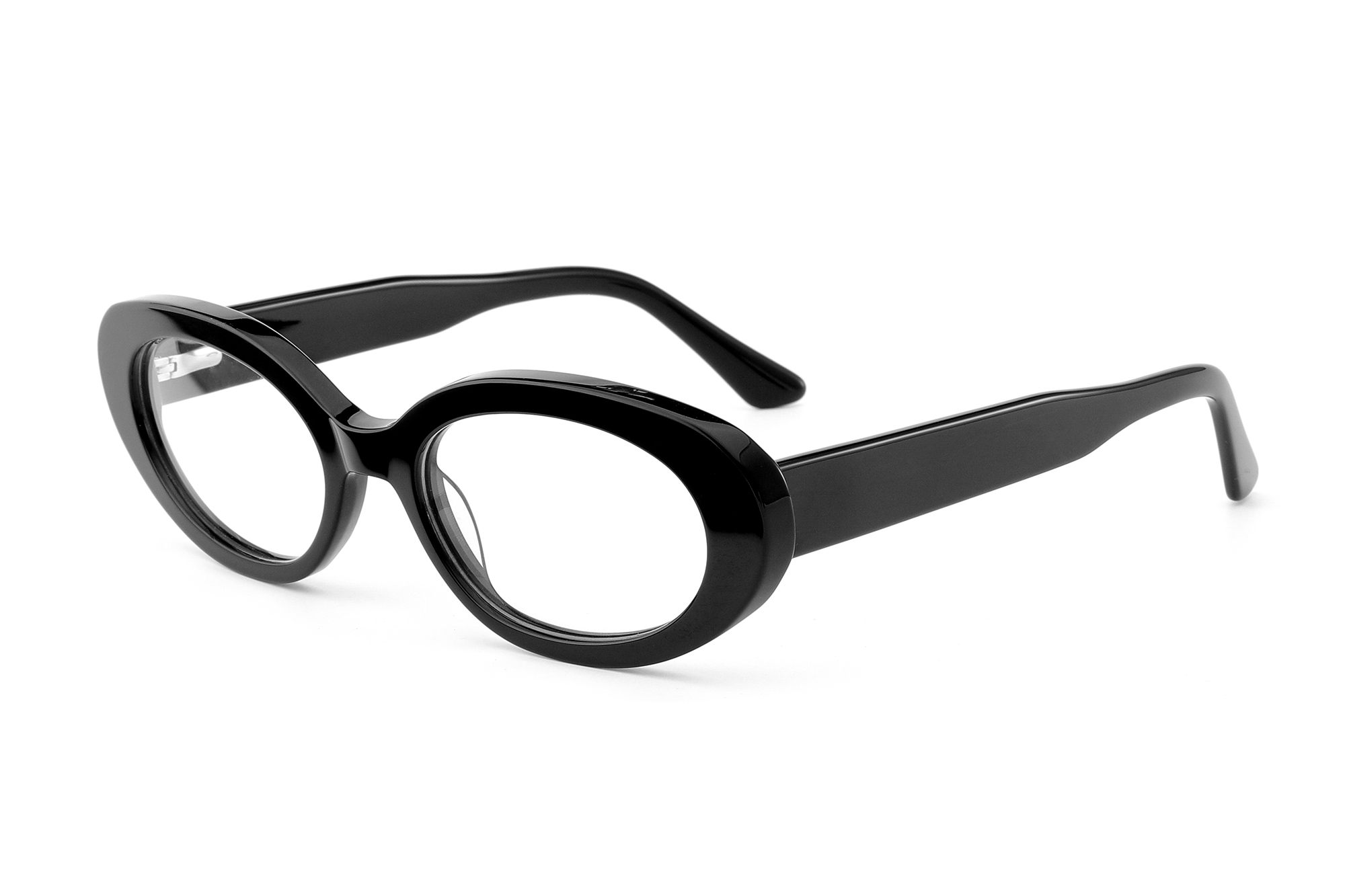
Distinguishing between OEM and ODM capabilities sets your production timeline. Original Design Manufacturing (ODM) involves customizing existing factory molds. It offers faster turnaround times and lower upfront costs. Original Equipment Manufacturing (OEM) means engineering proprietary frame designs from scratch. This requires expensive tooling and longer lead times but guarantees entirely unique products.
The customization matrix involves several crucial decisions. First, determine your lens indices. Options usually include 1.56, 1.61, and 1.67 indices. These must support full prescription (Rx) compatibility if you plan to sell optical frames. Second, explore private labeling techniques. Tampography prints ink directly onto the temple. Laser engraving carves the logo permanently into the metal. Custom acetate lamination embeds your branding inside the material itself. Third, focus on premium packaging. Source eco-friendly cases, microfiber cloths, and sturdy outer boxing. These premium elements complete the OEM blue light glasses ecosystem beautifully.
Navigating typical minimum order quantities (MOQs) requires careful negotiation. Factories usually demand specific quantities per model and color. Securing the right blue light blocking glasses OEM partner allows your brand to scale seamlessly.
Negotiate phased rollouts for large orders to manage cash flow efficiently.
Start with core colors like matte black or classic tortoise shell before expanding.
Discuss safety stock agreements for your most popular frame designs.
Regulatory certifications act as mandatory entry barriers. They are not optional upgrades. You must understand FDA Registration requirements in the USA. Europe strictly enforces CE Marking rules. These regulations apply equally to non-prescription and Rx-ready frames. Manufacturers must conduct drop-ball testing under FDA 21 CFR 801.410. This crucial test guarantees basic impact resistance. The test drops a steel ball onto the lens center to verify durability. Passing this prevents dangerous shattering incidents during consumer use.
Implementation risks constantly threaten new product lines. Misaligned technical CAD drawings frequently cause massive delays in prototype iterations. Ensure your designers communicate clearly with factory engineers. Another major risk involves inconsistent lens tinting. Inconsistent tinting across mass production batches destroys customer trust. If one batch looks slightly more yellow than the previous one, buyers will complain.
Instituting a strict Quality Assurance (QA) framework prevents these disasters. Hire third-party pre-shipment inspectors. They should utilize standardized Acceptable Quality Limit (AQL) metrics. An independent auditor will verify lens coating integrity. They will check frame alignment thoroughly before the shipment leaves the port.
Common Mistake: Relying entirely on factory self-reporting is dangerous. Always demand independent QA verification to protect your brand reputation.
Identifying reliable factories requires looking beyond glossy supplier directories. Trust indicators reveal true manufacturing capabilities. Look for facilities operating in-house testing labs. They should openly discuss their transparent capacity limits. A reliable factory boasts a proven history. They manufacture for compliant, mid-to-high-tier brands regularly. Avoid suppliers catering exclusively to ultra-cheap discount markets.
Use a strict evaluation framework when sourcing computer glasses wholesale.
Request baseline spectrometer reports: Demand raw data for their standard blue light lenses. Refuse partners refusing to provide actual lab charts.
Order off-the-shelf samples: Test frame rigidity physically. Actuate the hinges multiple times. Observe how the acetate or TR90 flexes under pressure.
Audit customization capabilities: Review their lead times carefully. Calculate tooling costs for custom molds precisely. Compare these costs against your initial financial budget.
Next-step actions involve moving systematically from a Request for Quote (RFQ) to the initial prototyping phase. Prototyping reveals a supplier's true communication skills. Pay close attention to how they handle your revision requests. Fast, clear communication indicates a strong long-term partner.
Profitable and reputable computer eyewear lines rely entirely on verifiable technical specifications. You must prioritize scientific transparency over aggressive marketing hype. Avoid the pitfalls of cheap, uncertified sourcing completely. Shoppers immediately notice poor construction and peeling lens coatings. Prioritize OEM partners who provide hard data. Demand spectrometer reports and comprehensive FDA/CE compliance records. High-grade materials easily outperform those competing solely on wholesale pricing.
Do not race to the bottom. Engage suppliers using a highly specific technical brief. Focus relentlessly on lens substrate quality, specific target wavelengths, and desired frame materials. Take action today by requesting lab reports from your currently shortlisted factories. Evaluate their sample hinges and AR coatings personally.
A: MOQs typically range from 300 to 600 pieces per model for custom acetate or TR90 frames. Factories often split this quantity across two or three colors. Stock ODM models offer greater flexibility. You can often secure lower MOQs ranging from 50 to 100 pieces for existing designs.
A: Provide transparent lab testing data directly to your buyers. Publish transmittance curves highlighting the 415nm-455nm range. Avoid gimmicky blue light pen tests. These pens often emit only violet light. Violet light tests mislead consumers and damage your credibility. Show real spectrometer reports instead.
A: In the US, non-prescription blue light glasses fall under Class I medical devices. They do not require pre-market approval, but strict registration applies. The manufacturer and the importer must register facilities with the FDA. Furthermore, the lenses must pass the standard drop-ball impact test.
A: Yes. Most high-quality OEM manufacturers integrate UV400 blocking as a standard feature. They combine this alongside blue light filtering directly within the lens substrate. This dual-protection approach adds massive value to your product offering. It protects users from harmful UV rays outdoors while reducing digital glare indoors.


