


Views: 0 Author: Site Editor Publish Time: 2026-09-16 Origin: Site


The 2026 eyewear market is experiencing a definitive shift away from brittle, petroleum-based plastics toward plant-based bioplastics, driven by consumer demand for longevity, sustainable manufacturing, and enduring design appeal. Buyers frequently overpay for designer eyewear, mistaking cheap injection-molded plastic for premium materials, resulting in frames that snap under pressure, lose their shape, or cause skin irritation. Objectively evaluating Acetate Glasses requires understanding the material science behind cellulose acetate, recognizing structural quality indicators like wire cores and hinges, and weighing the daily-wear trade-offs against metal alternatives. We will break down exactly how to identify authentic materials, evaluate frame construction, and maintain your eyewear for long-term performance.
Material Superiority: True acetate is a hypoallergenic, plant-based bioplastic cut from solid blocks, offering superior tensile strength and flexibility compared to standard injection-molded plastics.
Customizable Fit: Unlike rigid plastics, high-quality acetate frames are thermally adjustable, allowing opticians to mold the temples and bridge for a precise, slip-free fit.
Color Permanence & Versatility: Because colors and patterns are embedded within layered sheets rather than painted on the surface, acetate resists fading, peeling, and surface wear while offering a broad range of trending 2026 aesthetics.
Quality Verification: Premium acetate glasses can be identified by inspecting for embedded steel wire cores in the temples, riveted (not glued) hinges, and a seamless, hand-polished finish—regardless of the brand name attached.
Cellulose acetate stands apart as a semi-synthetic polymer derived entirely from renewable resources, primarily wood pulp and cotton linters. Manufacturers treat these natural cellulose fibers with acetic acid to create a durable, flexible material. Standard petroleum-based plastics like polycarbonate or TR90 rely on crude oil derivatives. These standard plastics prioritize mass production speed over structural integrity. Polycarbonate offers high impact resistance for safety glasses but lacks the flexibility needed for daily comfort. TR90 is lightweight but highly rigid, making it nearly impossible to adjust perfectly to an individual's face. Cellulose acetate bridges this gap. It provides a dense, rich structural foundation that absorbs kinetic energy while maintaining enough flexibility to accommodate custom facial adjustments.
The eyewear industry is currently transitioning rapidly toward bio-acetate formulations. Traditional cellulose acetate requires chemical plasticizers to achieve its signature flexibility. Bio-acetate replaces these synthetic chemicals with organic, plant-derived additives. This shift creates a frame material that is 100% biodegradable under industrial composting conditions. You get the exact same structural durability, tactile warmth, and visual depth as traditional acetate, but with a significantly reduced environmental footprint. Manufacturers are adopting bio-acetate as the baseline standard for premium frames in 2026, eliminating the toxic off-gassing sometimes associated with cheaper plastic manufacturing.
Understanding the manufacturing process reveals exactly why acetate commands a premium. Factories produce cheap plastic frames by melting plastic pellets and injecting them into a pre-shaped mold. This process takes seconds but creates internal stress points and visible mold seams. Acetate manufacturing takes weeks. Technicians mix colored acetate dough, press it into large blocks, and slice it into rigid sheets. Computer Numerical Control (CNC) machines then mill individual frame fronts and temples directly from these solid sheets. Cutting frames from a solid block preserves the material's structural integrity. It prevents the microscopic internal fractures common in injection-molded plastics. After milling, the frames spend days tumbling in barrels filled with wood chips and polishing compounds to achieve a glass-like, seamless finish.
Cured cellulose acetate exhibits exceptional chemical stability. This makes it a medical-grade alternative for individuals suffering from contact dermatitis or sensitivities to heavy metals. Cheap metal frames often contain nickel alloys that leach into the skin when exposed to sweat. Injection-molded plastics frequently utilize harsh surface paints or clear coats that degrade and irritate the skin over time. Acetate requires no surface painting. The material itself is inherently hypoallergenic. The organic composition interacts safely with human skin oils and perspiration, ensuring comfortable extended wear without triggering allergic reactions or leaving chemical burns on the nasal bridge.
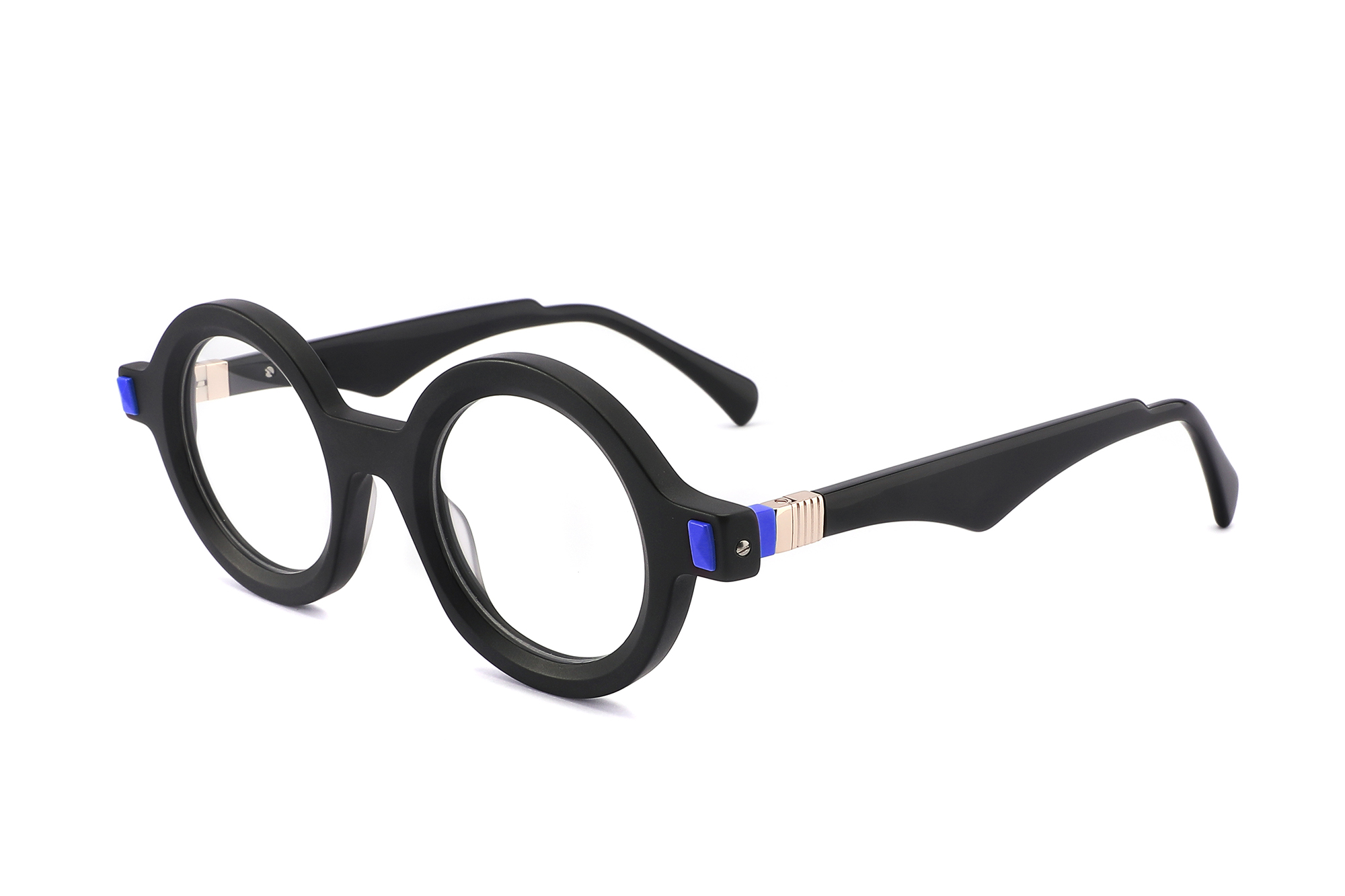
Acetate handles daily physical stress exceptionally well due to its unique layered structure. When you accidentally sit on a pair of injection-molded plastic frames, the rigid material snaps at the weakest point, usually the bridge or the hinge joint. Acetate behaves differently. The material possesses inherent elasticity. It absorbs kinetic energy and bends slightly under pressure before returning to its original shape. This flexibility prevents catastrophic snapping during accidental drops or rough handling. The dense molecular structure also resists deep gouging, ensuring the frame maintains its structural integrity through years of daily use.
The aesthetic superiority of acetate stems from how manufacturers apply color. Cheap plastics use surface-level spray paint that chips, peels, and fades under UV exposure. Acetate colors and patterns are mixed directly into the raw material before pressing. To create a classic tortoiseshell pattern, technicians fold different colored batches of acetate together by hand, creating a unique, three-dimensional depth that runs entirely through the frame. If you scratch an acetate frame, the color underneath remains exactly the same. You can simply buff out the scratch. This color permanence perfectly accommodates 2026 eyewear trends. The market heavily favors translucent hues, matte earth tones, and chunky retro silhouettes. Acetate delivers these aesthetics with a rich, organic warmth that synthetic plastics cannot replicate.
Users with strong prescriptions face a common problem: thick lens edges protruding from the frame. Thin wireframes or minimalist titanium frames expose the entire edge of a high-index lens, creating an undesirable visual effect. Acetate frames provide the optimal structural solution. The inherent thickness of a milled acetate rim completely masks the edge thickness of heavy prescription lenses. Furthermore, the rigid internal groove of an acetate frame holds thick lenses securely in place without warping. The material's stability ensures the optical center of the lens remains perfectly aligned with the pupil, preventing the visual distortion that occurs when cheap plastic frames flex and twist under the tension of a strong prescription.
Frame Material | Lens Edge Concealment | Structural Stability for High-Index Lenses | Risk of Lens Warping |
|---|---|---|---|
Premium Acetate | Excellent (Thick rims hide edges completely) | High (Rigid internal bevel holds lenses tight) | Low |
Injection-Molded Plastic | Moderate (Rims are often thinner) | Low (Material flexes under lens tension) | High |
Standard Wireframe Metal | Poor (Exposes entire lens edge) | Moderate (Requires strong barrel screws) | Medium |
Weight dynamics play a massive role in daily eyewear comfort. Acetate is denser and heavier than basic injection-molded plastic or thin wireframes. However, it remains significantly lighter than glass or heavy metal alloys. The secret to acetate comfort lies in weight distribution. Premium acetate frames utilize carefully sculpted saddle bridges or keyhole bridges. These designs distribute the frame's weight evenly across the entire nasal slope rather than concentrating it on two small points. This broad contact area prevents the painful pressure points and deep skin indentations commonly caused by the adjustable silicone nose pads found on metal frames. A properly fitted acetate bridge feels virtually weightless because the load is dispersed efficiently.
The most significant functional advantage of acetate is its thermoplastic nature. Rigid plastics like TR90 bounce back to their factory shape, making them impossible to adjust. Acetate softens when exposed to targeted heat. Opticians use specialized hot air warmers or heated glass bead baths to raise the temperature of the acetate temples and bridge. Once softened, the professional can physically bend the frame to match the exact asymmetrical contours of your face and ears. They can tighten the temple curve to prevent slipping or widen the frame front to relieve temple pressure. As the acetate cools, it locks into this new bespoke shape. This thermal memory ensures a permanent, custom fit that standard plastics simply cannot offer.
Eyewear faces constant exposure to harsh environmental elements. Natural skin oils, acidic sweat, cosmetics, hairspray, and direct ultraviolet sunlight rapidly degrade inferior materials. Painted plastics peel and blister. Cheap metals oxidize and turn green. Premium acetate demonstrates remarkable resistance to these daily hazards. The dense, non-porous surface repels cosmetic chemicals and prevents skin oils from penetrating the core material. Furthermore, high-quality acetate includes UV inhibitors mixed directly into the raw polymer. This prevents the frame from becoming brittle or bleaching out after prolonged exposure to direct sunlight. You can wear acetate frames through intense summer heat or rigorous physical activity without worrying about structural degradation.
Choosing between acetate and metal requires evaluating your daily environment. Acetate excels at resisting surface wear and chemical degradation. It completely ignores acidic sweat and heavy cosmetic use. Metal frames, particularly standard alloys, rely on thin electroplating for color. This plating eventually wears off at contact points, exposing the raw base metal to oxidation. Sweat reacts with this raw metal, causing galvanic corrosion that weakens the frame and stains the skin. Titanium solves the corrosion issue, as it is entirely inert and rust-proof. However, titanium frames still suffer from surface scratching that cannot be buffed out, whereas scratched acetate can be polished back to a factory shine.
Metal frames handle bending differently than acetate. A thin metal frame will bend easily upon impact. While it won't snap, it will permanently lose its shape, requiring a trip to the optician for realignment. Metal frames often require constant micro-adjustments because everyday handling slowly warps the wire structure. Acetate maintains strict structural memory. It takes significant force to bend a cold acetate frame out of shape. It absorbs minor impacts and bounces back to its optician-adjusted form. Acetate only loses its shape if exposed to extreme, sustained heat. For users who frequently take their glasses on and off with one hand, acetate offers superior long-term shape retention.
Hinge integration defines the lifespan of any frame. Titanium frames often utilize proprietary, minimalist hinge designs or screwless tension hinges. These are incredibly lightweight and require minimal maintenance, but if they break, the entire frame is usually ruined. Acetate frames require robust, traditional hardware. Because acetate is thick, it supports heavy-duty multi-barrel hinges. These hinges provide a smooth, high-friction open and close action. While acetate hinges require occasional screw tightening, they are highly repairable. If a standard hinge screw strips, an optician can easily replace it. The trade-off is straightforward: metal offers minimalist engineering, while acetate provides repairable, heavy-duty reliability.
Feature | Acetate Frames | Standard Metal Frames | Titanium Frames |
|---|---|---|---|
Durability | High impact resistance; absorbs shock without bending permanently. | Prone to bending and permanent warping upon impact. | Extremely strong; resists bending but can snap under extreme force. |
Weight | Medium. Requires good bridge design for weight distribution. | Light to Medium. Relies on nose pads. | Ultra-lightweight. Best for sports or sensitive skin. |
Adjustability | Excellent thermal adjustability for a permanent custom fit. | Easily bent by hand, requiring frequent professional realignment. | Difficult to adjust due to high rigidity; requires specialized tools. |
Hinge Type | Heavy-duty 5 or 7-barrel riveted hinges. | Standard soldered barrel hinges. | Minimalist, often screwless tension hinges. |
The modern eyewear market is heavily monopolized. A few massive corporations manufacture the vast majority of designer luxury brands. Consumers frequently fall into the luxury trap, paying exorbitant prices for a famous logo stamped on a subpar injection-molded plastic frame. A luxury brand name does not guarantee premium cellulose acetate. Independent, boutique eyewear brands often provide significantly higher material quality at a lower price point because they invest in CNC milling and raw materials rather than celebrity marketing campaigns. You must learn to look past the logo on the temple. Evaluate the physical construction of the frame using objective structural indicators to determine if you are buying true acetate or overpriced plastic.
The most definitive test for authentic, high-quality acetate is the presence of a steel wire core. Because acetate becomes highly flexible when heated, it requires an internal skeleton to maintain its shape over time. Manufacturers shoot a metal rod directly through the center of the acetate temple arms. Hold the glasses up to a bright light. You should clearly see a metal wire running from the hinge down to the ear tip. If the frame is completely opaque, check the inside of the temple; premium brands often mill a small window or use translucent inner layers to showcase the custom-engraved wire core. If there is no wire core, the frame is either cheap injection-molded plastic or extremely low-grade acetate that will warp within weeks.
Hinge construction separates premium eyewear from disposable fashion glasses. Inspect the point where the hinge meets the frame front and the temple. Low-tier frames use heat-sunken or glued hinges. The manufacturer simply melts a small hinge directly into the plastic. These inevitably snap out under pressure. Premium acetate frames utilize 5-barrel or 7-barrel hinges that are physically riveted through the material. Look at the front of the frame and the outside of the temples. You should see two or three metal pinheads flush with the acetate surface. These pins run entirely through the acetate and anchor the hinge block on the inside. Riveted hinges can withstand years of torque and daily abuse without separating from the frame.
You can identify fake acetate by inspecting the frame's surface finish. Run your fingernail along the top edge of the frame front and the bottom of the temples. Injection-molded plastic frames always have a faint, raised line running along the center of the edge. This is the mold seam where the two halves of the factory mold met. Authentic block-cut acetate has absolutely no mold seams. The edges should feel perfectly smooth and slightly rounded from the wood-chip tumbling process. Additionally, look for a deep, glass-like luster. Cheap plastic uses a sprayed-on clear coat that feels slightly sticky or squeaky. Premium hand-polished acetate feels dense, smooth, and naturally warm to the touch.
The primary vulnerability of cellulose acetate is its sensitivity to extreme heat. The exact thermoplastic property that allows opticians to customize the fit also means the frame can lose its shape if improperly stored. Leaving acetate glasses on a car dashboard during a hot summer day is a guaranteed way to ruin them. The ambient heat inside a locked vehicle easily exceeds the temperature required to soften the material. The frames will warp, the lenses may pop out, and the custom ear bends will flatten. You must store acetate frames in a hard case in a temperature-controlled environment. If they do warp slightly from accidental heat exposure, do not attempt to bend them back yourself; take them to an optician for safe thermal realignment.
Over years of heavy use, acetate frames can develop a condition known as blooming. This appears as a white, cloudy residue forming where the frame touches the skin, typically around the bridge and the temples. Blooming occurs when acidic sweat and skin oils slowly draw the organic plasticizers out of the acetate. This is not a structural failure, but an aesthetic issue. Unlike cheap painted plastic, which is permanently ruined when the surface degrades, acetate can be restored. An optician can use a buffing wheel with pumice and polishing compound to strip away the oxidized microscopic top layer. This professional buffing process restores the frame entirely to its original, glossy factory condition.
While acetate offers superior durability, its density requires careful consideration for users sensitive to weight. Thick-gauge, chunky acetate frames are currently trending, but they carry significant mass. If you are prone to sinus pressure, tension headaches, or have a very low nasal bridge, a heavy acetate frame may cause discomfort during extended 12-hour wear. The key to mitigating this risk is a precise bridge fit. You must ensure the frame's saddle bridge matches the exact slope of your nose. If the bridge is too wide, the frame will slide down and rest heavily on your cheeks. If you require absolute minimal weight for sports or medical reasons, titanium or TR90 may be a more appropriate functional choice.
Acetate Glasses remain the superior choice for buyers prioritizing long-term durability, rich aesthetics, and a customizable fit. The material's ability to absorb impact, retain deep color patterns, and conform precisely to facial contours justifies the investment, provided you know how to verify the material's authenticity. By checking for wire cores, riveted hinges, and seamless finishes, you can easily avoid overpriced plastic imitations.
For users with strong prescriptions, metal allergies, or a tendency to be tough on their eyewear, acetate is the clear winner. The thick rims perfectly mask high-index lenses, while the hypoallergenic organic polymer protects sensitive skin. Conversely, users requiring ultra-lightweight performance for sports should look toward titanium or TR90 alternatives.
To ensure you make the right investment, follow these next steps:
Check your current frame measurements printed on the inside temple to ensure a proper bridge fit before purchasing thick acetate.
Consult your optician regarding your specific prescription to confirm the acetate frame groove can accommodate your required lens thickness.
Physically inspect the hinges for metal rivets and verify the presence of steel wire cores inside the temples.
Request a professional thermal adjustment immediately upon receiving the frames to lock in a custom, slip-free fit.
A: Yes, cellulose acetate is denser and slightly heavier than standard injection-molded plastics like TR90 or polycarbonate. However, this density provides vastly superior structural balance, durability, and a premium tactile feel. Properly fitted acetate distributes this weight evenly across the nasal bridge, ensuring comfortable daily wear.
A: No. Acetate is highly durable and flexible. Its layered, block-cut structure absorbs kinetic energy, allowing the frame to bend slightly under pressure rather than snapping. It easily withstands daily wear and tear, drops, and rough handling far better than brittle, standard plastic frames.
A: You should never attempt DIY adjustments on acetate frames. While the material is thermoplastic, it requires specific, controlled heat from a professional frame warmer or glass bead bath. Bending cold acetate at home will cause the material to snap or create micro-fractures at the hinge joints.
A: Acetate is a plant-based bioplastic CNC-milled from solid blocks, offering hypoallergenic properties, deep embedded colors, and thermal adjustability. Standard plastic is petroleum-based, melted, and poured into molds, resulting in rigid, brittle frames with painted surfaces that peel and cannot be custom-fitted.
A: Yes, they are the optimal choice. The thick rims and sturdy internal grooves of acetate frames perfectly conceal the thick edges of high-index lenses. The rigid structure also prevents the frame from warping under the tension of a heavy prescription, keeping the optical center aligned.
A: With proper care, high-quality acetate frames can easily last 5 to 10 years. Their lifespan is extended by their repairability; scratched surfaces can be professionally buffed, and standard riveted hinges can be easily repaired or tightened by any qualified optician.


